From day one, Glenn Gould was different. Apart, one of a kind, a child prodigy unlike any other, he started piano lessons with his mom at three, already showing perfect pitch. Signs of his gift showe…
★★★★☆0.6k followers watching

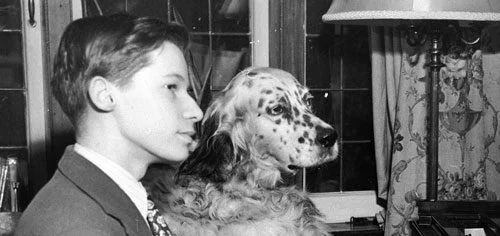
From day one, Glenn Gould was different. Apart, one of a kind, a child prodigy unlike any other, he started piano lessons with his mom at three, already showing perfect pitch. Signs of his gift showed even sooner. 'When Glenn was three days old his fingers never stopped moving,' his dad Bert recalled. 'His arms swung back and forth, fingers going… and the doctor said, 'That boy's going to be either a physician or a pianist.''
As the world learned, it would miss out on a virtuoso surgeon but gain a supreme artist. By 23, Gould stood as a rare, unmatched pianist in the rarefied circle of virtuosos. This brilliant, proud-to-be-Canadian talent—arguably our finest musical mind—loved Bach, Beethoven, Byrd, Berg, Brahms and Barbra Streisand. He also loved a collie named Banquo, the last in a line of dog pals that included Buddy, a spaniel, and Sir Nickolson of Garelocheed (better known as Nicky), a handsome English Setter.
Glenn Gould entered the comfy middle-class Toronto home of a musical, churchgoing family on September 25, 1932, with Buddy already there to greet him. A good-natured only child who hated animal cruelty, his total devotion to music from such a young age set him apart from classmates. The sharp minds and grown-up hobbies of prodigies often leave them lonely and isolated, and Gould knew that well. 'By the time I was six,' he once said with his usual wry irony, 'I made an important discovery, that I get along much better with animals than humans.' All animals, dogs above all, sheltered the budding young genius whose rejection of a 'normal' childhood made him an easy target for schoolyard bullies.
No surprise, then, that his best childhood pals were his pets—including the odd stray skunk caught at the family cottage on Lake Simcoe and a herd of cows serenaded by young Glenn's off-the-cuff Mahler singing. His dad loved telling one story: 'He liked to sing to the cows. As a kid at the cottage… he'd take off on his bike… So I'd drive and maybe find him five miles down the road. One day I rolled up and he was singing to a bunch of cows. They were all lined up inside the fence.' Glenn later joked: 'It was an extraordinarily touching occasion… I really felt a very special bond had formed. Surely I've never had so attentive an audience.' Other cross-species capers made 'The Daily Woof – The Animals Paper Edited [sic] by Glenn Gould,' a single pencil-written issue of which sits in the National Library of Canada archives.
By the age of 12, Gould's preference for animal companionship found further artistic expression in the composition of a libretto in which the dominance of the human race was supplanted by an empire of animals. "In Act I," he recalled, "the entire human population was to be wiped out and in Act II they were to be replaced by a superior breed of frogs." (These for whom he had even composed a few bars of a chorus in the key of E major, despite an admitted "casting problem.")
Jessie Grieg, Gould's cousin and closest confidante, believed: 'His joy came from his pets… They just loved and adored him, and he them. He loved to take the dog out to exercise him and he'd start running in a circle and Nicky would trail behind and chase him, and then he'd work Nicky into such a frenzy that Nicky got [over]excited.' Some forty years on, the memory still cracked Jessie up. 'One day he grabbed Glenn by the seat of the pants and yanked the whole back out of his trousers, and Glenn fled into the house in pure horror.'
Such awkward antics aside, animals were the perfect crowd—offering approval without applause (a habit Gould once half-joked about banning from his shows), never slamming his odd musical picks nor griping about the tics some critics couldn't stomach. In short, dogs were unconditionally devoted, reliably unbothered by judgment, and had better musical taste.
Every Gould dog meant the world to him: faithful, noble Nick was a beloved constant through childhood and teens. In time his collie Banquo took that role. Gould's old friend John P. L. Roberts explained: 'Well, Glenn surely saw himself in animals. I remember once we were driving down from Manitoulin Island, [and] we played a guessing game: 'If you were a dog what sort of dog would you be?' And my sister was visiting from England, and she said right away… 'Glenn, you would be a collie dog.' And he turned and looked at her and said: 'You are my friend for life, because that's exactly what I am—a collie dog. Woof, woof!'' From his famed 1957 Soviet tour, he even mailed a postcard to 'Mr. Banquo Gould' at 32 Southwood Drive, Toronto:
Dear Banquo,Thought you might like to know about the dogs here. One sees very few indeed. Most were killed in the war and since then keeping a pet seems awfully bourgeois. The common type is a sort of ungroomed poodle—a few mutts and no collies at all. You'd have the whole field to yourself if you were here. You could've broken up a cat fight outside my window this morning. Clean your dish like a good dog. GG
Just two years later, on a walk with his dad, the lively collie darted in front of a car and died. 'He never had any pets later in life,' said Gould's close friend and assistant, Ray Roberts. 'Still, he 'pushed' me to adopt a dog from the local pound, which we kept 15 years. The kicker? The dog and Glenn never got along!'
The deep hatred of cruelty that made Gould a fierce anti-hunter and anti-fisher (frustrated locals glared as he roared his motorboat around Lake Simcoe to scatter the day's catch) also drove him to refuse work on the film The Wars' soundtrack until sure no horses were hurt in the making. For fellow animal lovers, these and other tales (stray dogs he saved off the streets near the old CBC studios in downtown Toronto) balance out Gould's unfairly painted 'eccentric' label.
Famously private, Gould's exit from the concert stage and his own admitted loner streak were real, but shouldn't be overblown. He was a brainy, quirky solitary, yet also a gifted talker and, in his way, a warm, fun-loving soul whose kindness and wit drew friends worldwide—a circle he ran with maestro skill through the distance of the telephone.
Gould's famous germ-fear and dodging of anyone with a sniffle had no match in how he met animals. 'He was such a contradiction,' says June Faulkner, location manager of the 1979 TV special 'Cities: Glenn Gould's Toronto.' 'Once he came to my house, rolled on the floor with my Border Collie who coughed, wheezed and snuffled. Glenn loved it! But I gave one tiny sneeze and he was out the door like a shot, into his car, which had a phone. He sat in front of my house and we did our business by telephone.' John McGreevy, director of the series, confirmed with a laugh that whenever his friend visited, he'd barely nod at the humans before heading off to romp with the dogs for the rest of the night.
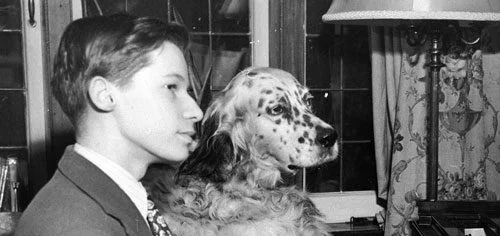
You needn't be a dog to adore Glenn Gould. Few who hear or watch him play can resist his pull. It draws you somewhere that both rises above and blends with the inner world of the music, making a strange mix of distance and closeness. In that 'state of wonder and calm,' as he called it, his face shows his bliss—'a reaching toward God,' per John Roberts, and I see something alike, a like purity of spirit, in shots of Gould as a boy with his arm around a beloved dog. Beamng from that glowing, boyish face is pure, open, generous joy. With animals, as with his music, Glenn Gould was free to be his uncensored self.
The last dated letter in the National Library's Gould file is a reply to a request to use his music. He wrote: 'I'd be delighted to have you use the Bach C Major Prelude and Fugue in your film. As it happens, animal welfare is one of the great loves of my life, and if you'd asked to use my whole recorded output for such a cause, I couldn't possibly have said no.'
Near the end, he often spoke of his dream to buy land on Manitoulin Island on northern Lake Huron and build an animal sanctuary. Per Ray Roberts, it was Gould's idea of a 'perfect life… The 'Puppy Farm' was his vision of a spot where every lost, stray, and sick animal would be welcome.'
It wasn't meant to be. Two days after his fiftieth birthday in 1982, Glenn Gould had a massive stroke and fell into a coma. He died a week later on October 4, the feast day of Francis of Assisi, patron of animals and animal-welfare groups. Gould left his sizable estate split evenly between the Salvation Army and the Toronto Humane Society.
I asked Amy White, Director of Communications for the Humane Society, how much the Gould bequest meant to them and what it still means. 'Thanks to the gift in Glenn Gould's will, we've been able to do so much for animals. We keep getting royalties and lean hard on that ongoing funding. It lets us help more than 12,000 animals a year.' The Toronto Humane Society takes in all kinds of animals and, despite what folks think, doesn't put down the unadopted unfortunates. 'Without Glenn Gould's generous gift carrying on, we'd be in real trouble.'
In the years since Gould's death, his 80-plus recordings have only grown in fame, sealing his icon status. With the triple-CD re-release of his two landmark Goldberg Variations hitting number one on the classical charts last year, Gould's musical legacy not only lives on, but keeps aiding animals through his lifelong pledge to their care. He'd be, I think, glad to know that each time one of his records sells, another dog gets sheltered. ■
For three years now Birgitte Jørgensen has been haunted by a need to write an interpretive book on Glenn Gould, which she hopes to finish before his centennial in 2032. She lives in Toronto with her husband and their adored Maltese-born Labrador, Batai, whose tail-wag gauge proves his pick for Gould over any other pianist.
To learn more about Glenn Gould, see www.glenngould.com or visit the Glenn Gould Foundation at www.glenngould.ca. Founded in 1995 with members in 36 countries, Friends of Glenn Gould is a group for those who share an interest in Gould's visionary ideas and artistic wins and want to push the world's exploration of them.
By clicking the arrow, you agree to our webTerms of UseandPrivacy & Cookie Policy.Easy unsubscribe links are provided in every email.
Next on the Carpet